

GAlveston 1891 Custom House
and Post Office
The 1891 Federal Custom House and Post Office was a terra cotta-clad declaration of Reconstruction and industry, which defined communities in the new south.
RESEARCH
This project was produced in part through the Ed Protz Preservation Internship awarded by the Galveston Historical Foundation, whose support made the depth of primary research possible. The reconstruction of Galveston's Federal Custom House and Post Office is an attempt to read a single building as a lens onto the wider economic and political history of the island - to understand why this structure was built the way it was, by whom, for what purposes, and what it meant to the city that received it.
In 1891, Galveston was the only deep-water commercial port of the Gulf Coast. Cotton moved through its wharves in quantities that made the island consequential to national and international markets. The federal government's decision to build a substantial new customs house here (the first since the late 1850s) was not incidental — it was an assertion of Reconstruction era federal presence in a city that had functioned with considerable commercial autonomy, yet was also a necessity to accommodate the needs of growing import and export demands.
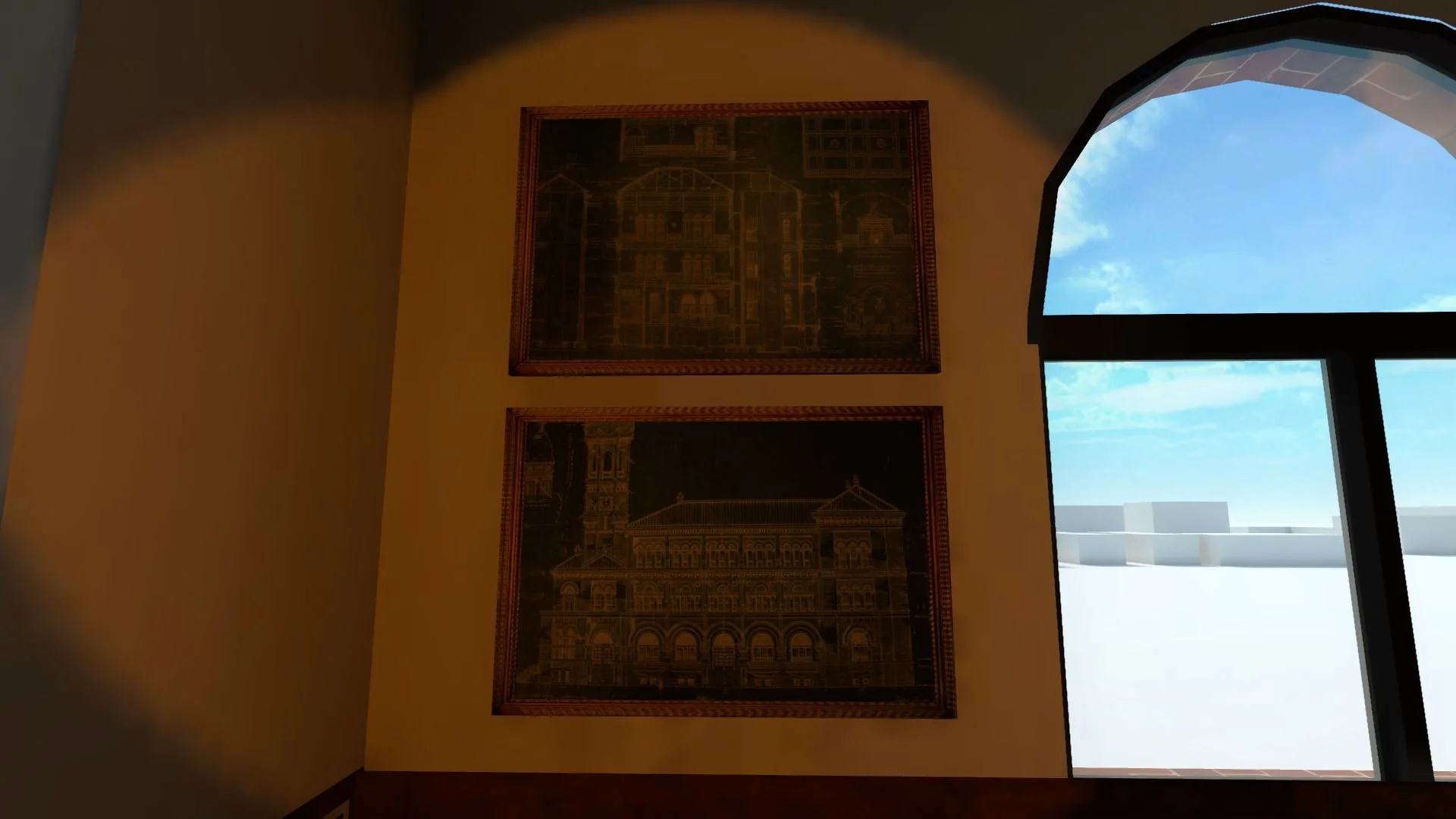
The federal construction contract, a remarkable primary source document that specifies materials and construction sequences, and architectural drawings, provided the backbone of the reconstruction. The building was designed by Nicholas J. Clayton, Galveston's foremost architectural voice in the Gilded Age, and his design fits within his body of work that benefits from comparison. To reconstruct areas missing reference information, we tested the design against Clayton's other buildings. Often, I found myself coming back to Clayton’s Old Red on the UTMB campus, built the same year as the Custom House. Comparative analysis of this kind is not guesswork — it is a required method of architectural reasoning for future reconstructions. A Bibliography for this project can be found on the archive page.
DEVELOPMENT
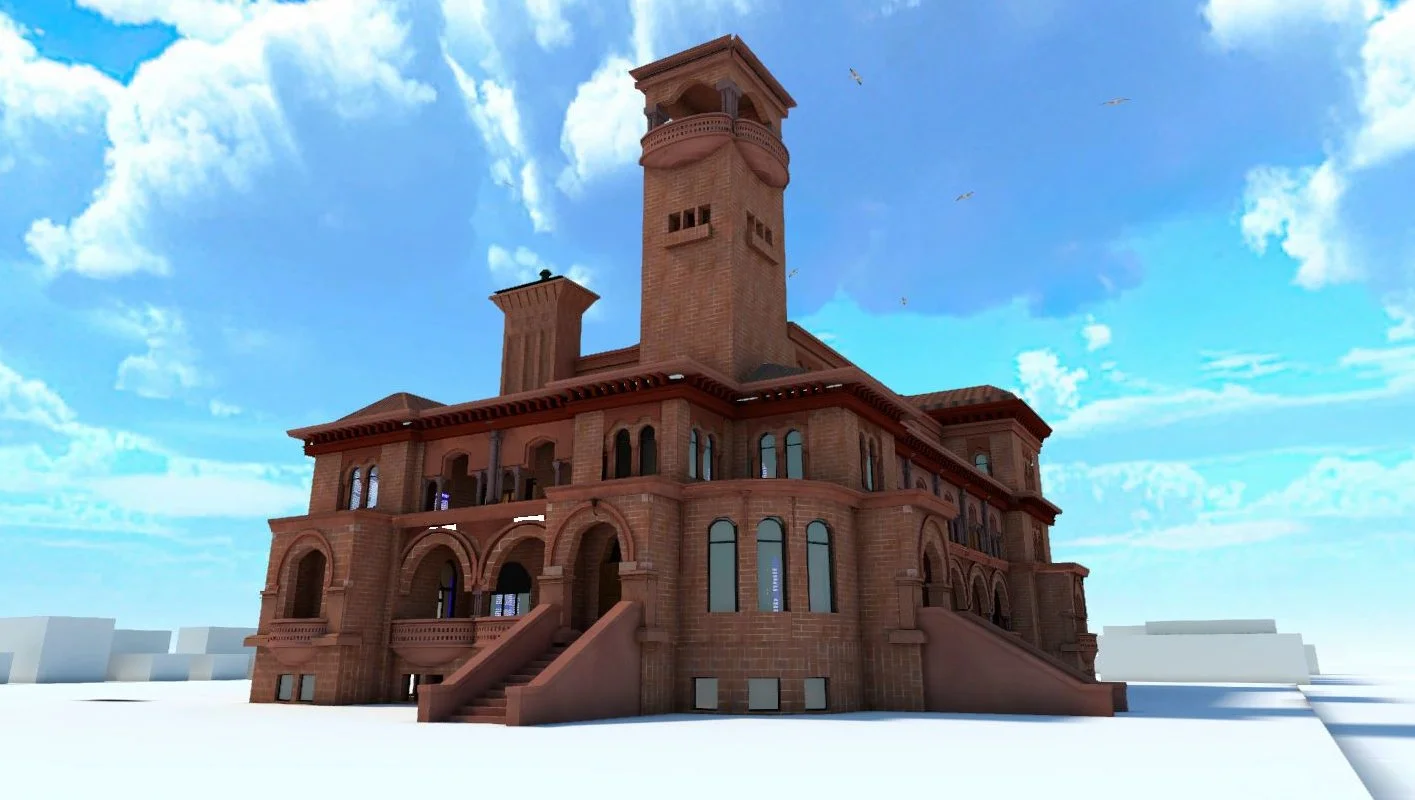
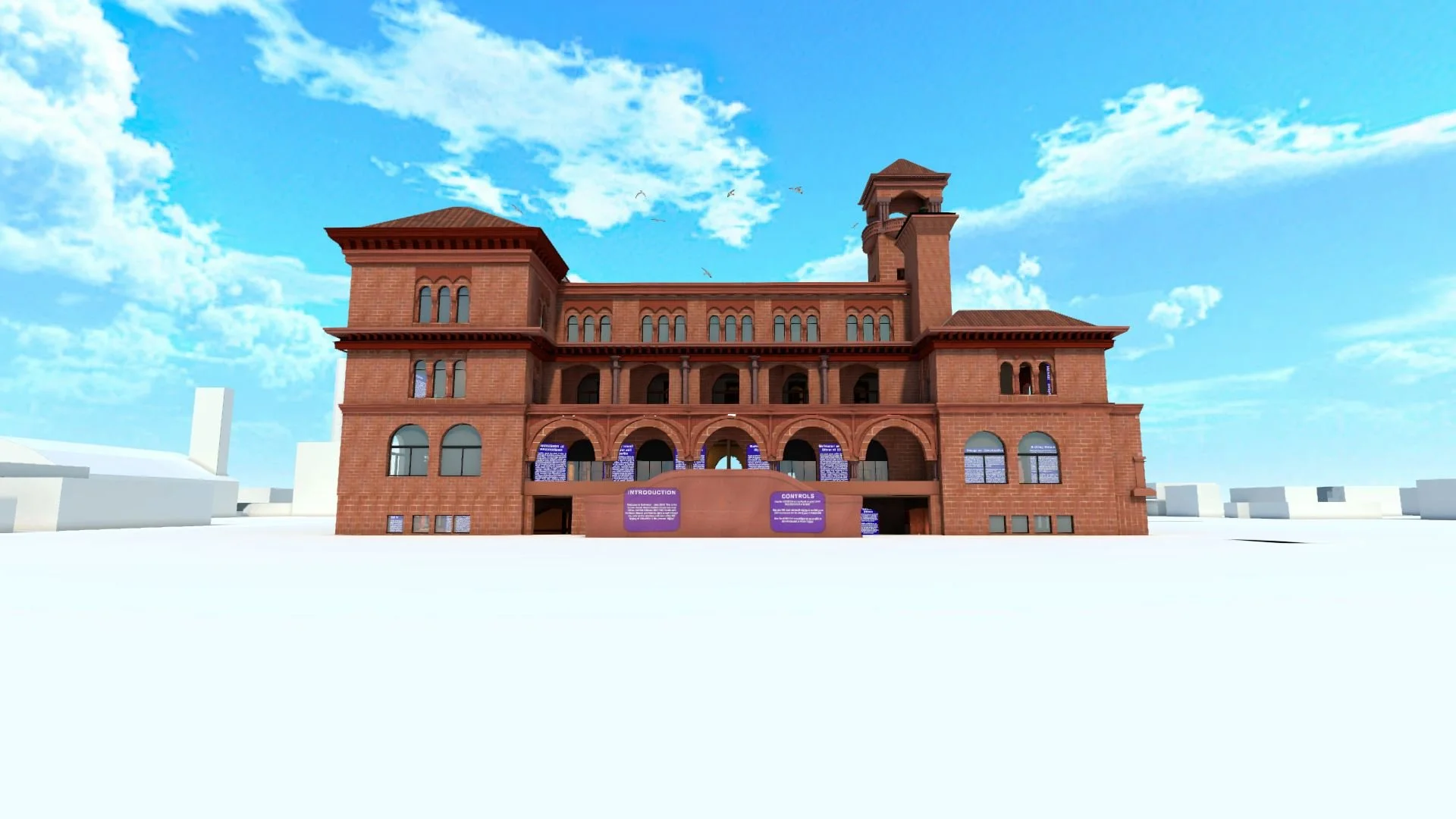
The exterior reconstruction follows the evidence closely - the construction contract, surviving photographs, physical survey of the standing structure, and comparative analysis with Clayton's documented work. Masonry coursing, window proportions, cornice detailing, and material specification are all recoverable with reasonable confidence.
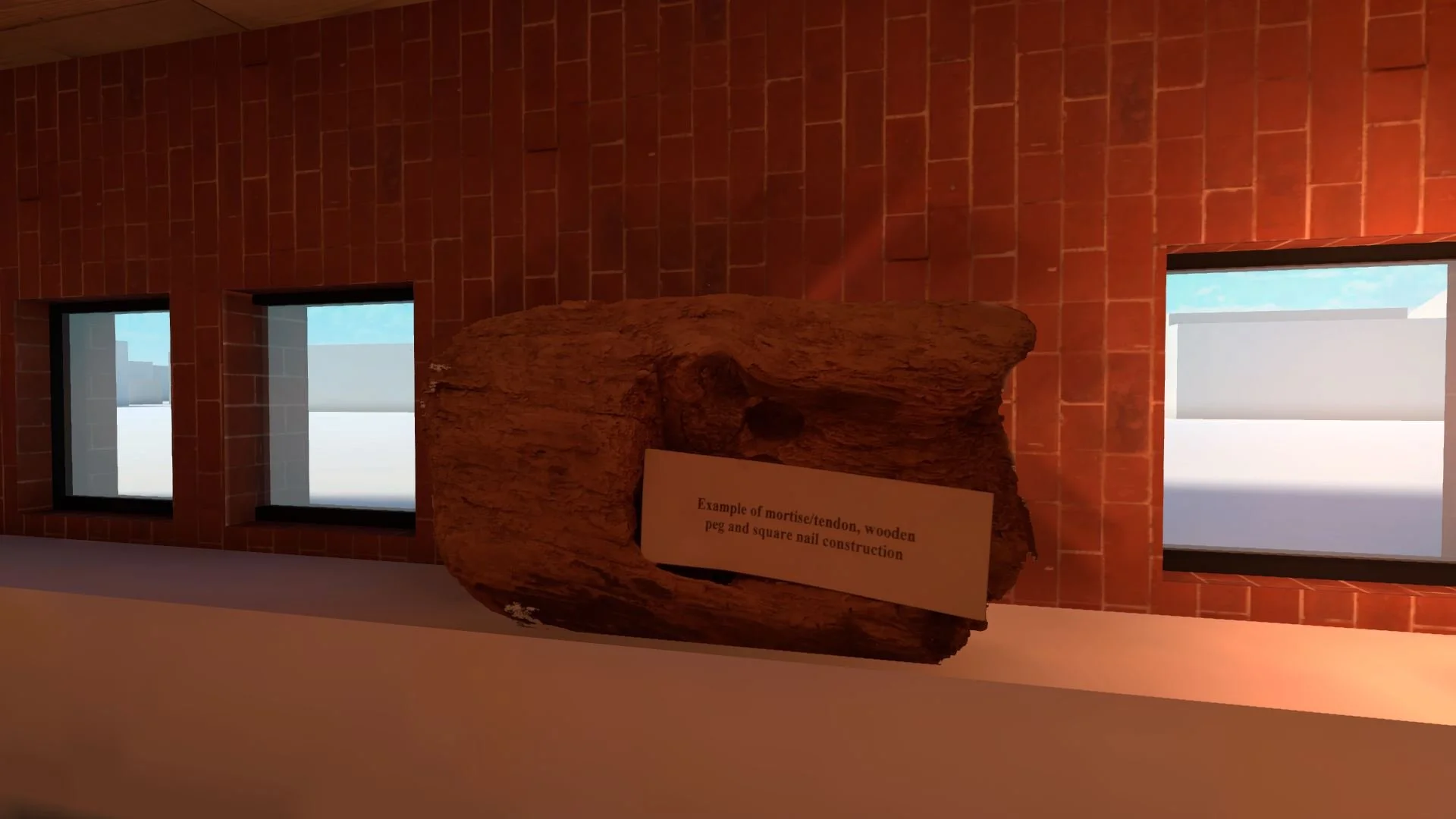
The interior is a different problem. Limited historical photography meant that a strict documentary reconstruction would require either extensive speculation presented as fact or a space so hedged with uncertainty. Neither serves the project nor the scholarship. The solution was a third option: to design the interior as a curated digital gallery — a space that uses the architecture of the building as its organizing structure while populating it with the primary and secondary materials that illuminate what the building meant.
EXPERIENCE
The reconstruction gives you access to the full spatial sequence of the 1891 structure - from the street approach through the public hall and up through the federal floors - with documentary materials embedded throughout that contextualize what you are moving through and why it was built this way.
Users moving through the reconstructed interior encounter the building not as an empty shell but as a vessel for Galveston's intertwined historic narratives. Digitally curated architectural drawings, maps, construction documents, and more line the walls where the evidence for the space is inferential. Threading through the building's rooms and circulation spaces are broader histories - of the cotton trade, of federal reconstruction-era politics in Texas, of Galveston's extraordinary commercial ambitions and their violent interruption in 1900 - are laid out as a visitor would encounter them moving through the building's actual programmatic sequence.
This is not a passive experience. The gallery spaces invite time and attention. Users who move quickly will encounter the architecture. Users who stop will encounter the history. The experience is available for PC VR headsets and as a standalone Quest build. A desktop non-VR version is also available for those without a headset.
FURTHER STUDY
While I believe there are yet undiscovered materials that may help continue to develop scholarship on this building, I felt the state it was published in was acceptable for now. If proper time and attention were available, the experience would benefit from additional curation and the development of new interactable mechanisms. It would also be beneficial to further develop the building model itself with the intention of running flood and materials simulation to see if we can gather any insight as to how it proved so resilient during the Storm of 1900.