Texas 1936 Centennial VR
RESEARCH
This experiment is what kick-started A3D History as a concept. As an intern with the Dallas Historical Society, I spent months organizing and digitizing blueprints from the 1936 Texas Centennial Exposition, many of which had likely never been seen in decades. The buildings they described, supplemented by historic photography, were extraordinary and complemented the built landscape that remains to this day.
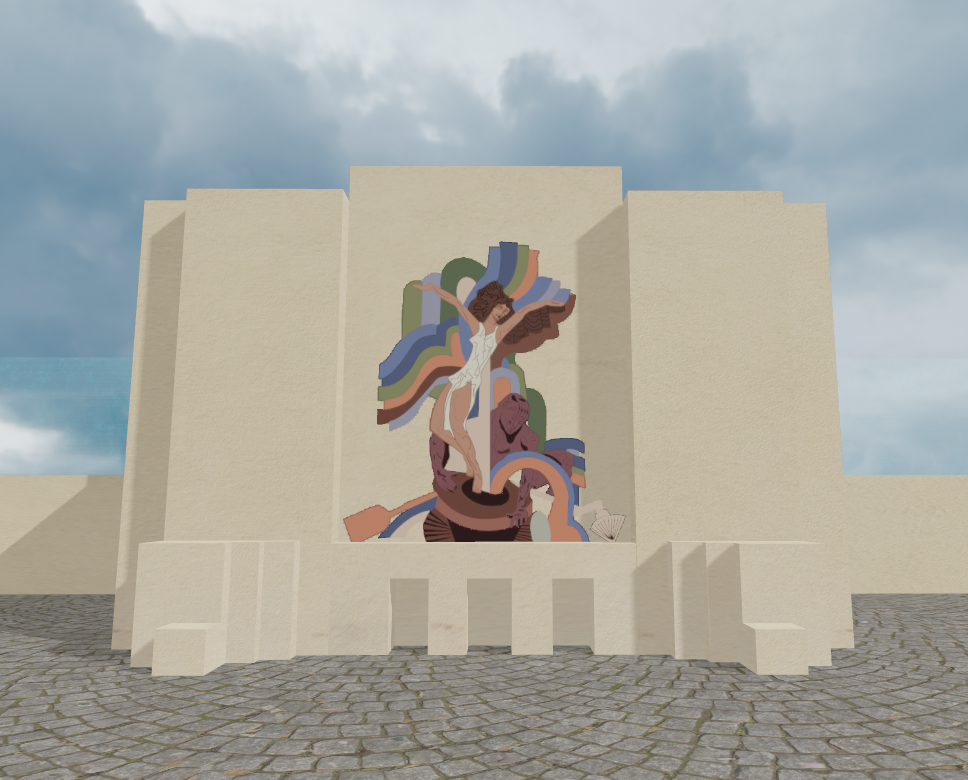
The 1936 Texas Centennial Exposition in Dallas was one of the great architectural events of Depression-era America - a world's fair (the first to utilize air conditioning) conceived to celebrate the centennial of Texas independence and built to promote Texas’s rapidly expanding industry and cultural impact. The federal government additionally poured significant money into Fair Park. The Works Progress Administration (WPA), the National Park Service (NPS), and Citizen Conservation Corps (CCC) not only built many of the buildings, but also contracted numerous international muralists, playwrights, and craftspeople for lasting cultural contributions. Architects crafted a distinctly Texan style of Art Deco, which can still be seen across the state. At the helm of design and construction was architect George Dahl, known more for his Modernist works such as the recently demolished Robert F. Kennedy Stadium in Washington, D.C. Crowds came by the millions, and though many buildings remained in place for the 1937 Pan-American Trade Exhibition, most of what was built was demolished soon after. Numerous murals were painted over or lost entirely.
DEVELOPMENT
What remained at Fair Park is among the largest collections of 1930s exposition architecture still standing anywhere in the United States. The surviving structures give us dimensions, proportions, and material relationships we can triangulate against the blueprints. The demolished buildings come back into focus.
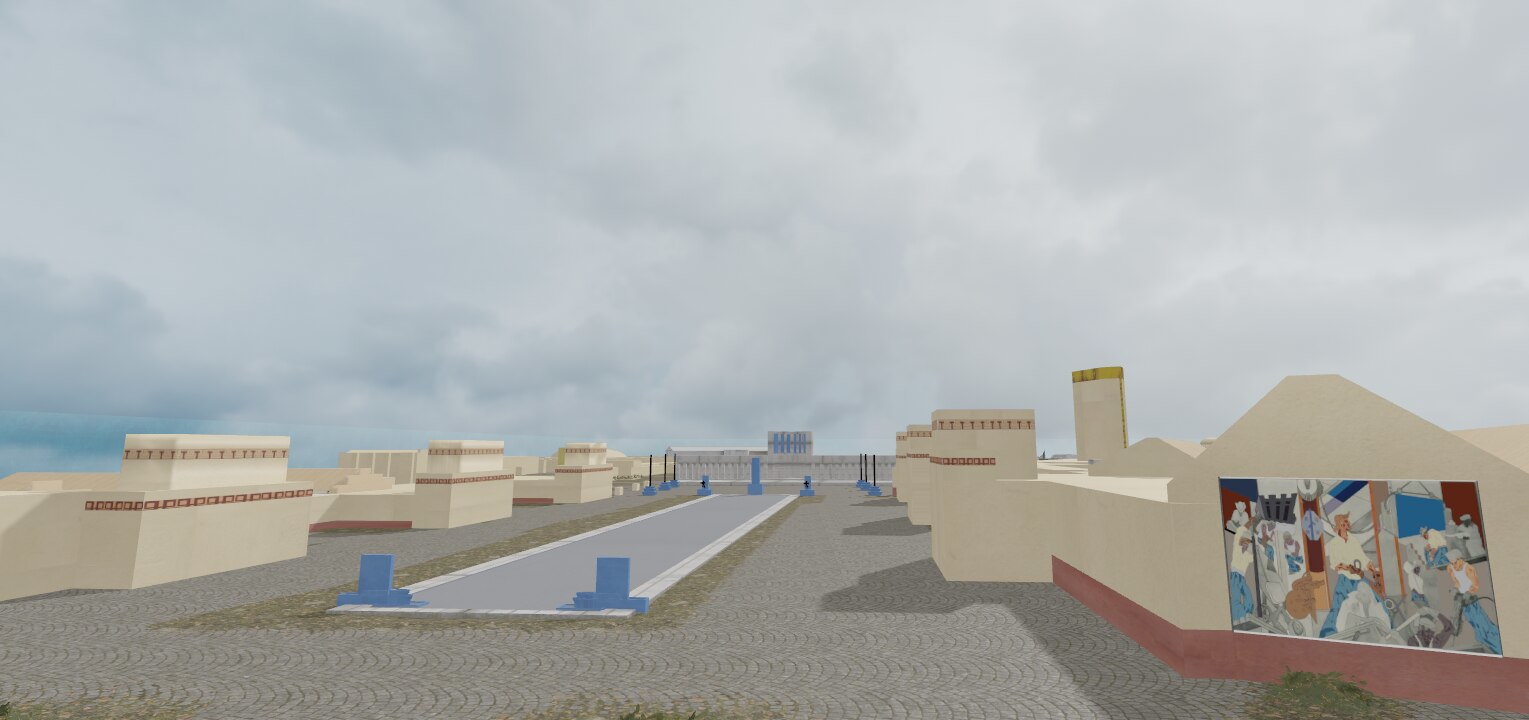
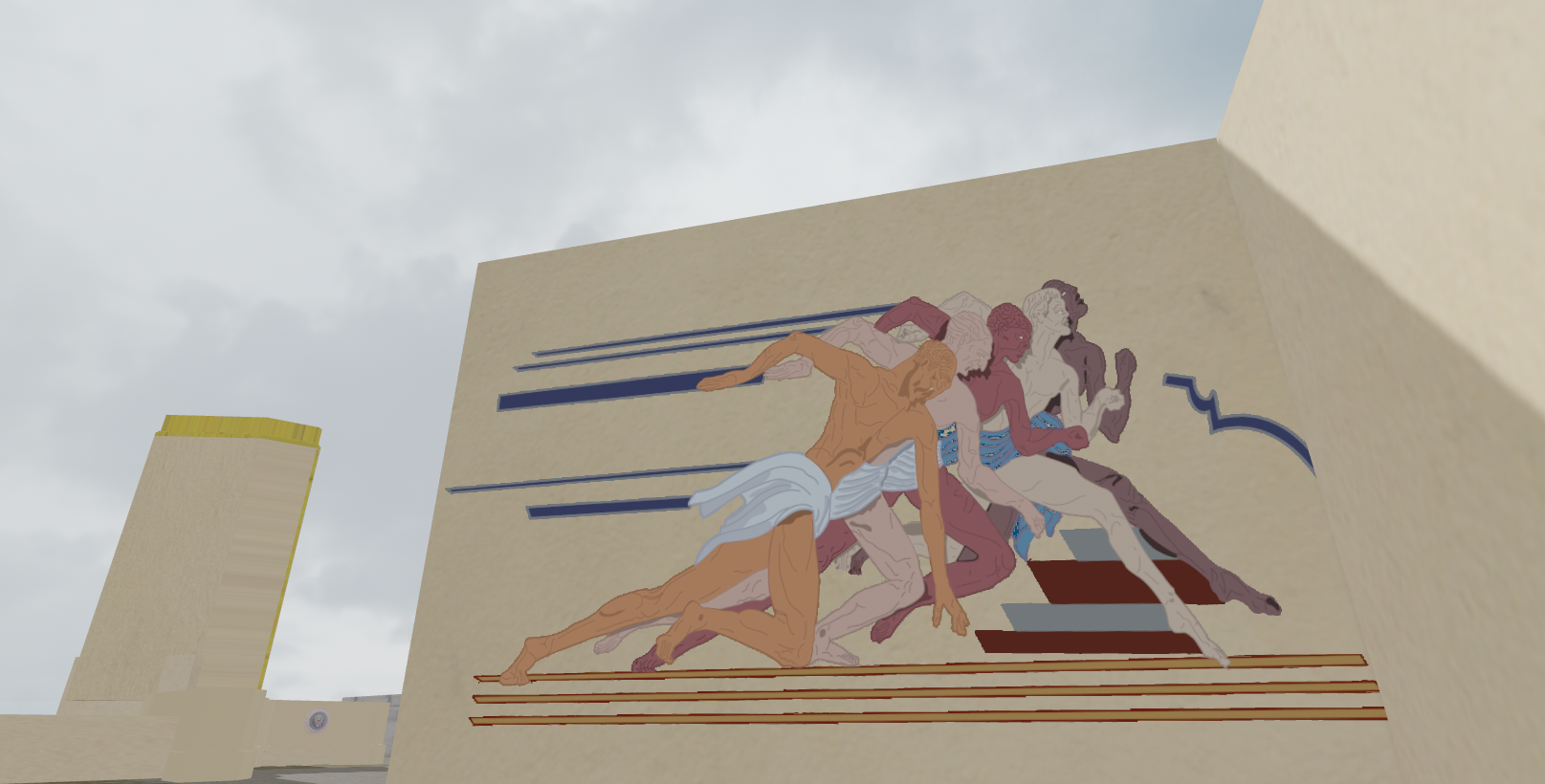
For this reconstruction, I worked at a 1:16 scale, building the lost structures from blueprint documentation and period photography, and attempted a hypothetical reconstruction of several WPA murals from surviving studies, descriptions, and comparative works. The purpose of the scale was to build at 1:1, which would mean that buildings require significantly more detail, and the digital environment would also be notably more difficult to traverse. At a 1:16 scale, the buildings are around the size of the user themselves, giving ample ability to interpret fine details and apply nice quality light baking.
The process of building this experience - working through those blueprints, tracking what survived and what didn't, understanding why certain buildings were kept, and others weren't - expanded my own understanding of the Centennial far beyond what I expected going in.
EXPERIENCE
Considering this was my foray into not only a project like this, but 3D design in general, it turned out nicely. The experience was rudimentary and lacked text or audio to provide additional historical context. While I use the term “walking simulator” as a compliment, it lacked any depth or interaction beyond walking. I think the scale of buildings was appropriate for the size of the project as well.
FURTHER STUDY
Given that this was an initial experiment and proof of concept, there wasn’t an effort to catalogue and preserve what work was done, what wasn’t, and how certain development decisions were made. There are a few buildings which are further developable outside of the Dallas Historical Society Archive (One of interest to me was the WPA and CCC buildings, which may have drawings in the National Archives). The fact that it was built on modding tools for another existing property was also a natural limit to expanding access. As of the time of writing (now 2026), Valve has still not distributed a Source 2 Engine SDK as originally suggested. It’s clear the engine would be powerful for VR and lighting optimization and prone to widespread utility, but we must instead rely on other tools in the meantime.