London Bridge VR
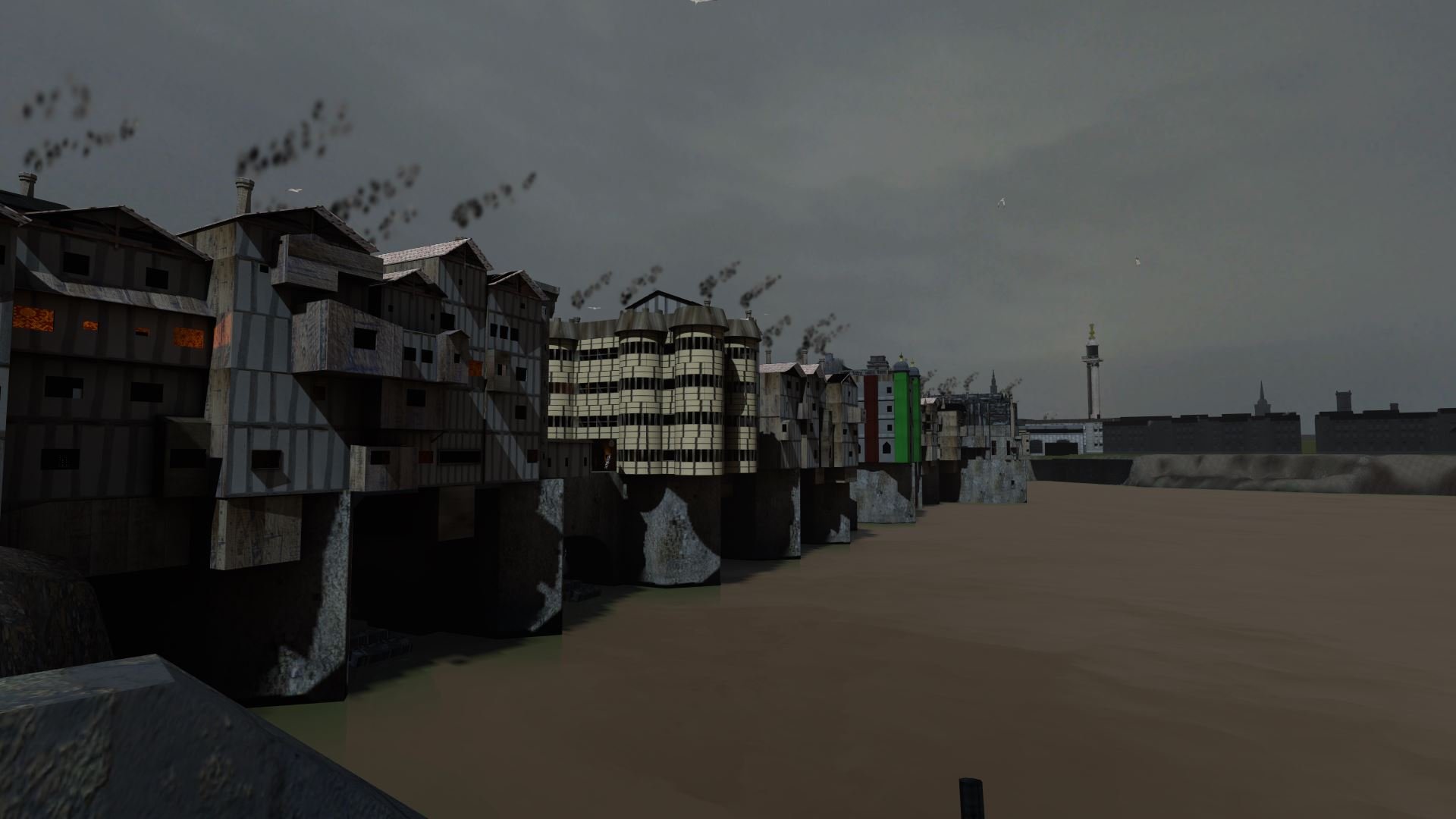
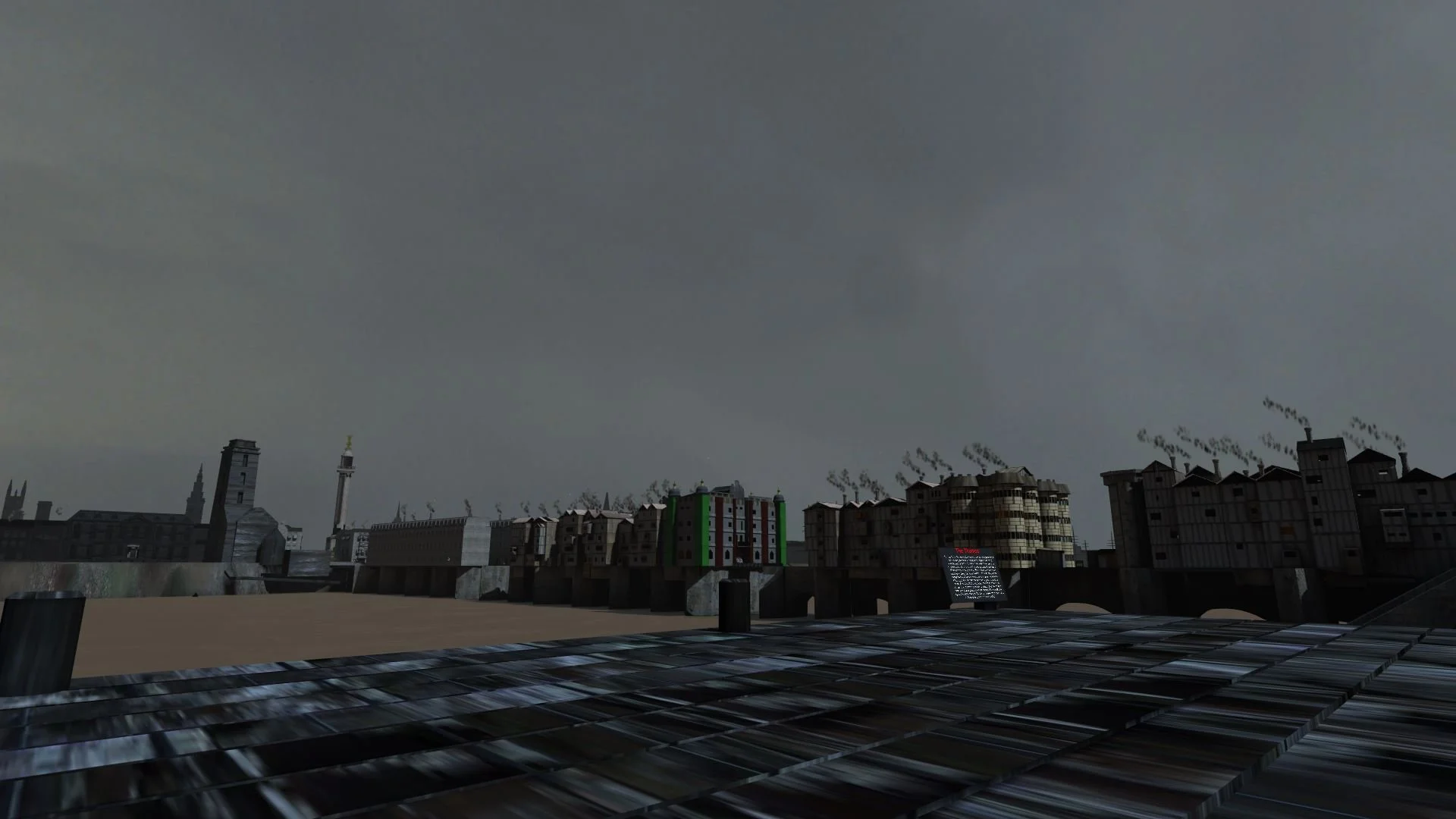
London Bridge in 1691 was more than a bridge. It was a community of around 500 residents with thousands more passing through the 15-foot-wide roadway every day. Stores lined the streets, one of the piers housed a church with catacombs built into the bridge foundation, and in certain segments, the jettied overhangs connected to completely cover the ground below. It is simply incomparable to anything that exists today.
RESEARCH
The reconstruction began with Dorian Gerhold's London Bridge and Its Houses - the most rigorous existing account of the bridge's architecture and commercial life. Gerhold was also seemingly the first to have access to tax assessments with room measurements made by the London Bridge Corporation. Complementing these were probate wills from the National Archives at Kew, which, when combined, paint a picture of people who lived and traded on the bridge.
Numerous paintings of the bridge exist from different eras - perhaps most famously, the work of Claude de Jongh. None of the artists seems particularly accurate in their renditions, but I think de Jongh best captured the ramshackle chaos of both the bridge buildings and the embankment with a touch of his uniquely Dutch perspective.
Much more significant research had to go into my understanding of the creation of London as a city. 1691 to me sits at an incredible historic inflection point: Fire, Plague, Civil War, and Revolution had reformed the city and English people to craft the great Georgian merchant republic of the 18th Century, and yet there was not yet anything to show that was the case.
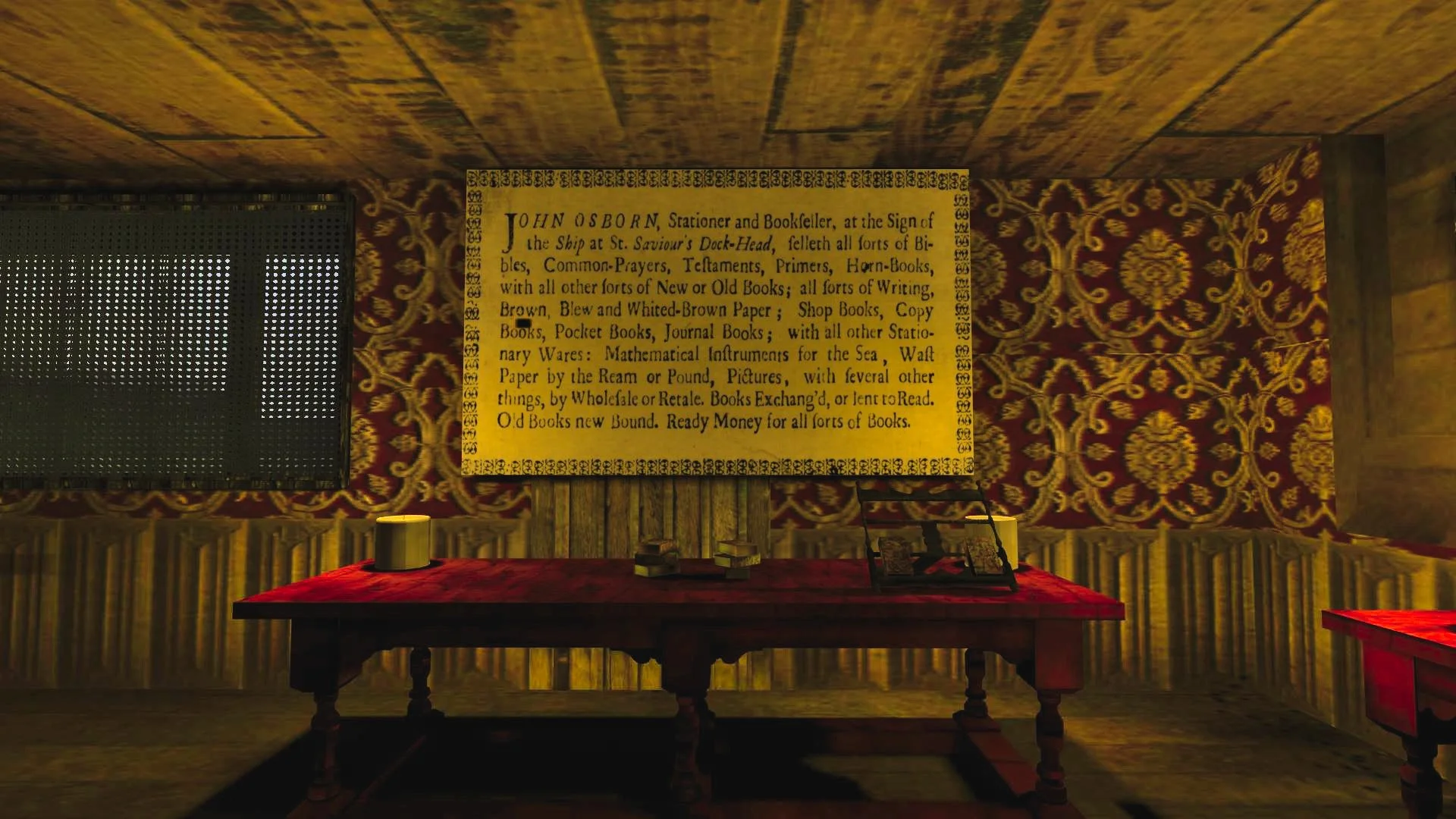
DEVELOPMENT
Plans, elevations, and written descriptions of the medieval bridge have existed for generations. What they cannot convey is the experience of being on the structure or in building interiors. Walking the bridge in 1691 meant moving through a canyon of homes: narrow (10-feet wide at its smallest), shadowed, acoustically enclosed, and smelling of the river and livestock passerbys. The interiors were cramped, stores on the ground floors, and with spiraling square stairs only about a foot wide - the most similar still standing I have found only in Paul Revere’s House in Boston, Massachusetts.
The reconstruction made this viscerally clear in ways the scholarship had theorized. 3D Modeling allowed me to identify choke-points that emerged naturally from the geometry. It also begged the still unanswered question - where did rainwater go? These were not theoretical problems for the people who used the bridge; they were daily facts of life.
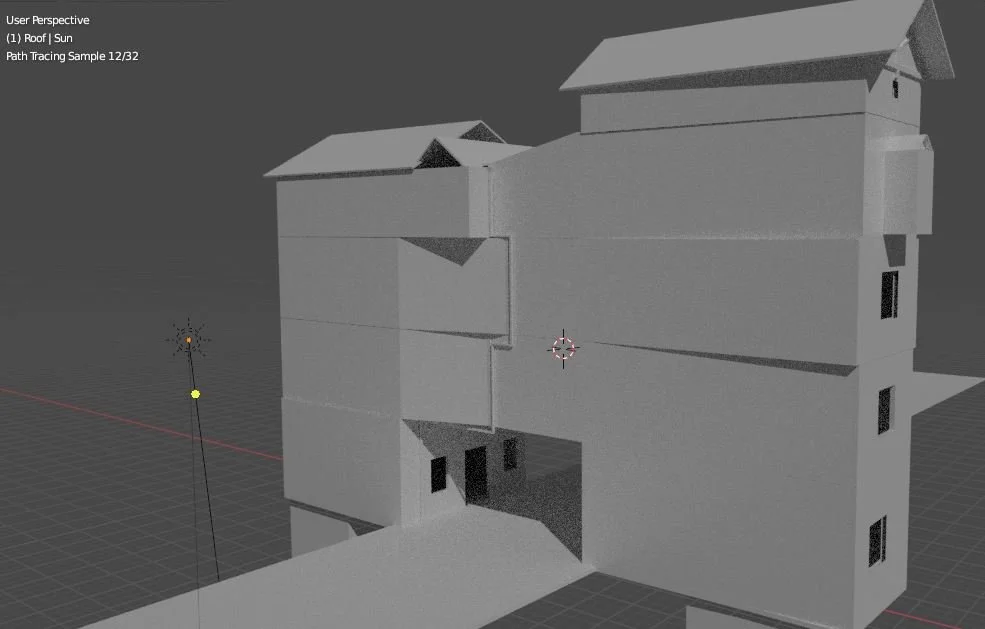
EXPERIENCE
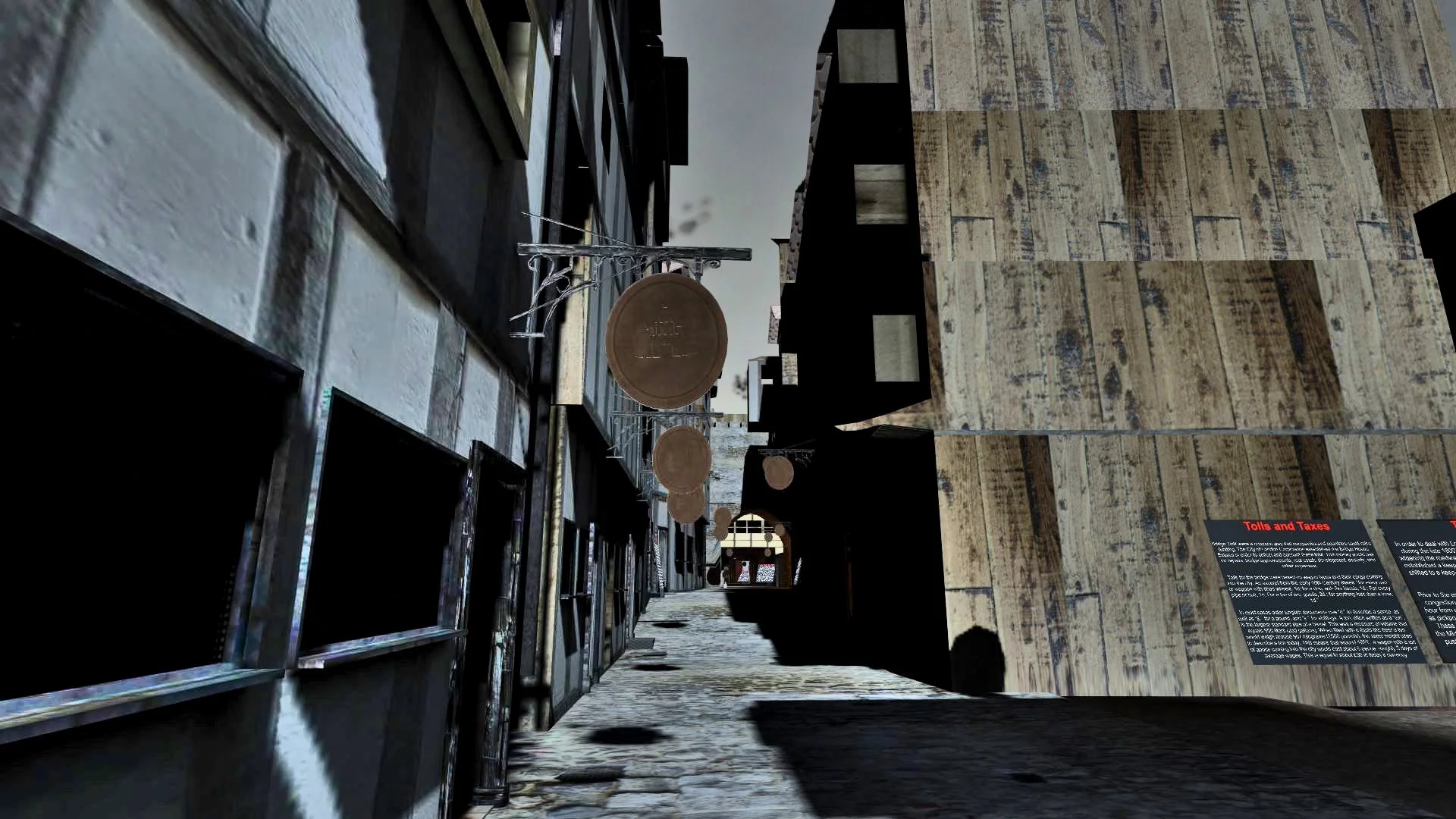
The bridge wasn't picturesque. It was loud, dark at midday, perpetually congested, and structurally eccentric in ways that shaped every life lived on it. The reconstruction is an attempt to make that legible - not to make it comfortable. It is best seen rather than described.
The technical constraints of early standalone VR (this was built to run standalone on Quest 1) shaped the project as much as the historical evidence did. Limited field of view, frame rate requirements, and the genuine claustrophobia of exploring spaces built for significantly shorter people - sometimes causing users to clip through the ceiling - meant a problem with no clean solution. Historical accuracy and user comfort often pull in opposite directions. The discomfort the modern user feels in a correctly-proportioned space is data about how differently that space was inhabited by people who had never known anything else.
While the experience technologically aged quickly, it was a lot of serious research and skill development for me to design and create. I am quite proud of the result, especially the actual educational materials and panels therein. It’s a project worth revisiting with a team of one hundred and millions of dollars.
The experience is available for PC-VR headsets. A desktop non-VR version is also available. All versions are free for your enjoyment.
The choice of 1691 as the target date was deliberate as well. By that year, the bridge had absorbed the consequences of an earlier fire in 1648 - the northern end had been rebuilt in standardized brick patterns that would inform the post-Great Fire of 1666 building codes. It creates an abrupt distinction of class and material culture on the bridge. Christopher Wren’s famous new steeples would have dominated the skyline, and the dome of St. Paul’s would be in the early stages of construction. This ability to contextualize the bridge alongside many buildings that still stand elevates the impact of historically educational experiences. Additionally, the southern portion of the bridge and embankment was still covered in medieval wooden buildings.
In some ways, reconstructing the embankment was an equally impactful historical reference point. Numerous places that do still exist, such as the ruins of Winchester Palace or Southwark Cathedral, connect educational materials to sites that are still relevant to travelers today.
FURTHER STUDY
This project rests on Gerhold's work and on the primary survey documents it synthesizes. The bibliography includes full citations for primary and secondary literature on the bridge as well as the city of London. This project created so many new questions that deserve answers, and opened my eyes to the potential for VR reconstructions and how to think about making experiences like these innovative and beneficial to the public good.